
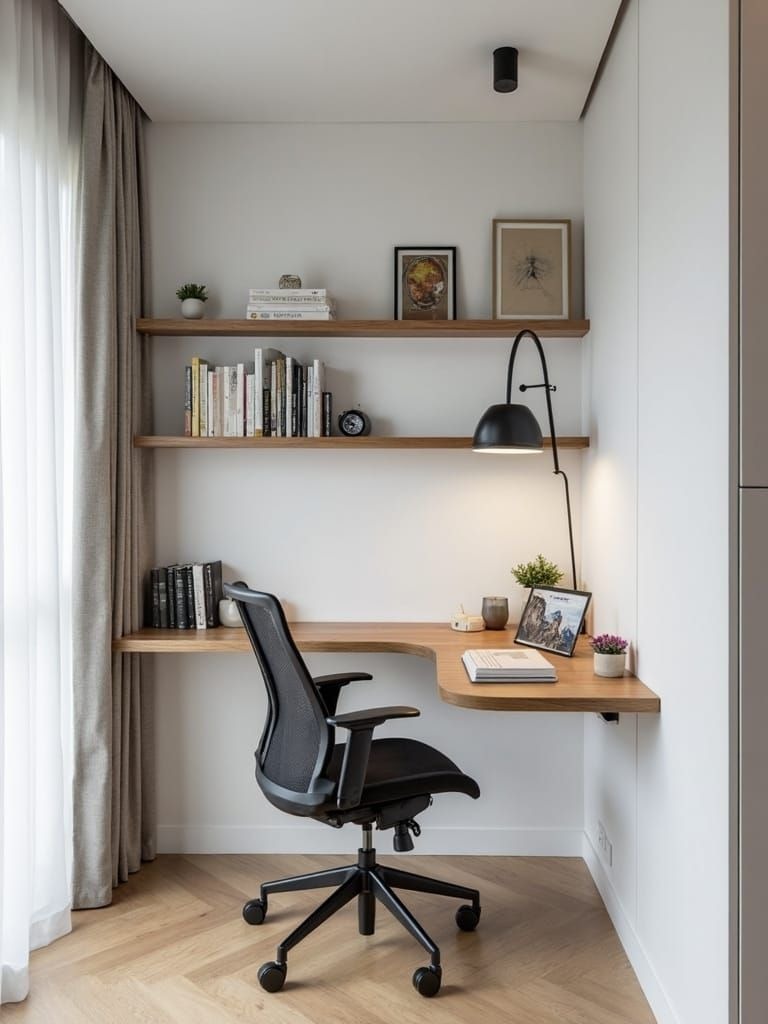
For many Canadians, remote work has shifted from a temporary solution to an everyday routine, as shown in Statistics Canada’s national remote-work report. In condos across cities like Toronto, Vancouver, and Montreal, finding space for a comfortable and efficient home office can be a challenge. Smaller floor plans, open layouts, and limited storage make it important to design a workspace that supports focus while still blending seamlessly with the rest of the home.
This guide explores practical ways to build a stylish, functional office in a condo, even when every square foot counts.
How to Design a Workspace That Works in a Condo
Home offices in condos often need to share space with living rooms, bedrooms, or even hallways. Instead of recreating a traditional corporate setup, the goal is to integrate a workspace into your existing layout without overwhelming it.
This approach focuses on scaled furniture, good lighting, and clever storage. It supports productivity while keeping the home inviting and uncluttered. With thoughtful planning, even a small corner can become a comfortable place to work.
Why a Well-Designed Home Office Matters
Your work environment affects focus, posture, and overall well-being, as supported by WHO research on sedentary behavior and health. A dining chair that feels fine for an hour often becomes uncomfortable during a full workday. Similarly, working in a cluttered or dimly lit area can impact motivation and mood.
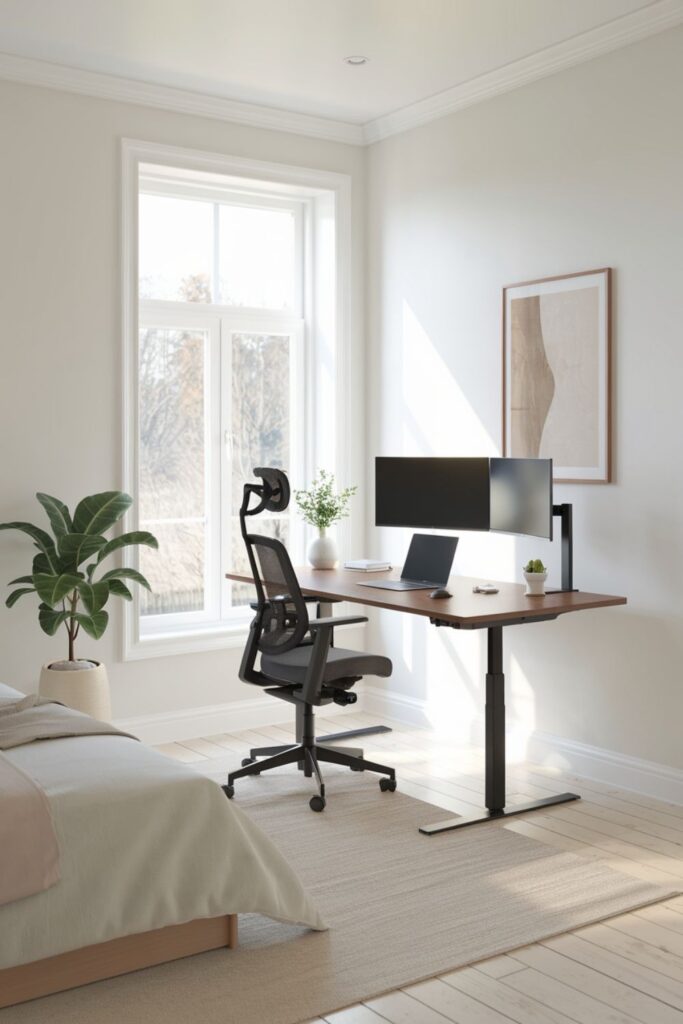
A well planned condo office creates a clear divide between professional time and personal time. It also adds value for future buyers, as versatile spaces are increasingly in demand. Even a compact but well designed workspace can make a condo feel more functional.
Comparing Desk Options for Small Condo Spaces
Choosing the right desk is essential. It needs to be compact but comfortable and should complement the rest of the home.
| Parameter | Floating Wall Desk | Compact Standing Desk | Ladder / Leaning Desk |
| Price | 150 – 500 | 400 – 1,200 | 200 – 600 |
| Availability | Medium | High | High |
| Complexity | Hard (Mounting required) | Easy | Medium |
| Ergonomics | Low | High | Medium |
Prices reflect common Canadian retail ranges.
How to Choose the Right Location and Lighting
In condos without a dedicated office room, picking the right spot makes a big difference.
1. Make the Most of Natural Light
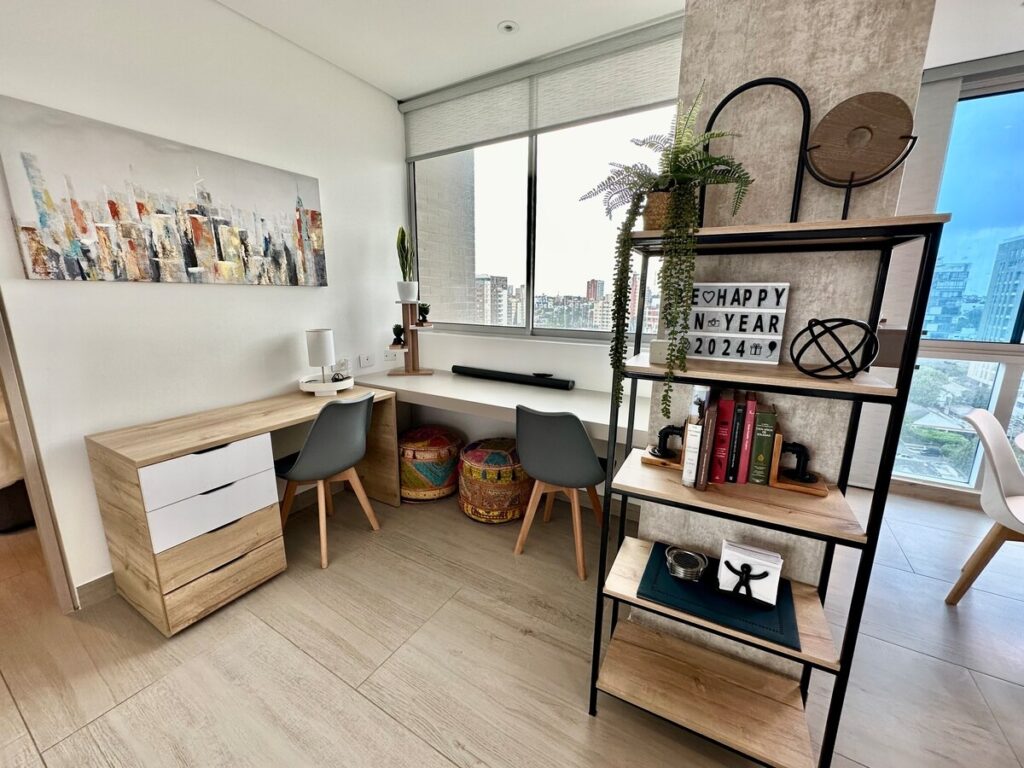
Position your desk near a window, ideally at a side angle to avoid glare, as supported by the Illuminating Engineering Society. Natural light improves focus and makes long workdays feel less tiring. It also helps create a pleasant background for video calls.
2. Define the Area With a Rug
If your workspace shares a room with your living space, a small rug can help visually separate the zones. It also helps protect floors from chair wheels and adds warmth in an otherwise open layout.
3. Think Vertically
When floor space is limited, use the wall. Floating shelves or tall organizers provide storage for files, supplies, or decor. This keeps the desktop clear and helps the area feel tidy.
Common Mistakes to Avoid
- Skipping the ergonomic chair: A dining chair or stool quickly leads to discomfort. A supportive chair in a simple fabric or mesh fits condo aesthetics while protecting your back.
- Poor lighting for video calls: Sitting with your back to a bright window creates shadows. Aim to face the light, or add a small desk lamp for even illumination.
- Letting cables take over: Tangled wires can make even the nicest setup look messy. Use cable clips or a small under-desk tray to keep everything organized.
Coffice vs Open Workspace: Which One Fits Your Condo?
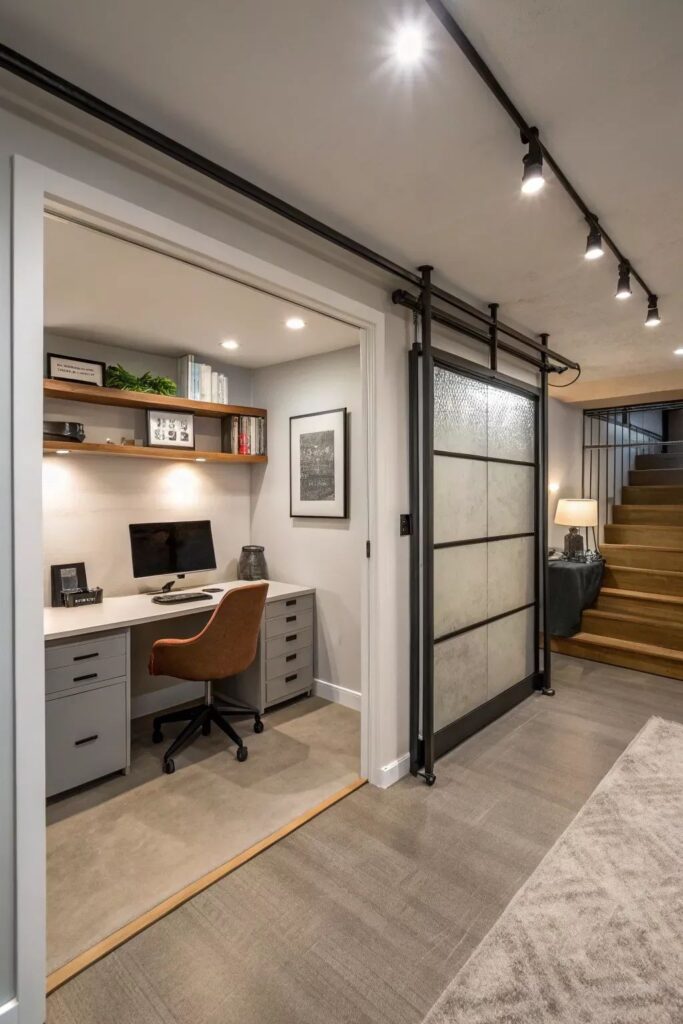
Many condo owners experiment with the idea of a closet office, often called a cloffice. Closing the doors at the end of the day creates a clear separation between work and home. This can be helpful for those who prefer a minimalist living space.
Others prefer an open setup with a stylish desk that blends into the main room. This option works better in bright, airy condos where closets may feel too small or dark. Both approaches can work well, depending on how much privacy you need and how tidy you prefer to keep the space.
Frequently Asked Questions (FAQ)
1. What should I consider when choosing paint colors for my office nook?
You should choose colours that promote focus but blend with the rest of your condo. Soft greens or blues are known to reduce eye strain and induce calm. See Color Psychology in Interior Design for more insights.
2. How do I choose the best background for video calls?
Keep it simple but curated. A bookshelf with organized books and a plant looks professional. Avoid having your bed or the kitchen sink visible in the background if possible.
3. What are the advantages and disadvantages of a standing desk in a condo?
- Advantages: Better health, increased energy, and flexibility.
- Disadvantages: They can be visually bulky and industrial looking; they often lack drawer storage.
Final Thoughts
A stylish home office in a Canadian condo is about making smart use of limited space while keeping comfort and productivity in mind. With well chosen furniture, good lighting, and simple organization, you can create a workspace that supports your daily routine without overwhelming your home. Whether you prefer a compact desk in the living room or a closed off office, the key is building a setup that feels both functional and inviting.